Every founder who invests in photos wants the same thing first: to look good. That part is easy. A capable photographer with decent light can make almost anyone look good for two hours. The trouble starts later, when those good-looking photos go up on a website and a sales page and do nothing. No inquiries. No “you’re exactly who I was looking for.” Just a nice face on a page that still is not booking work.
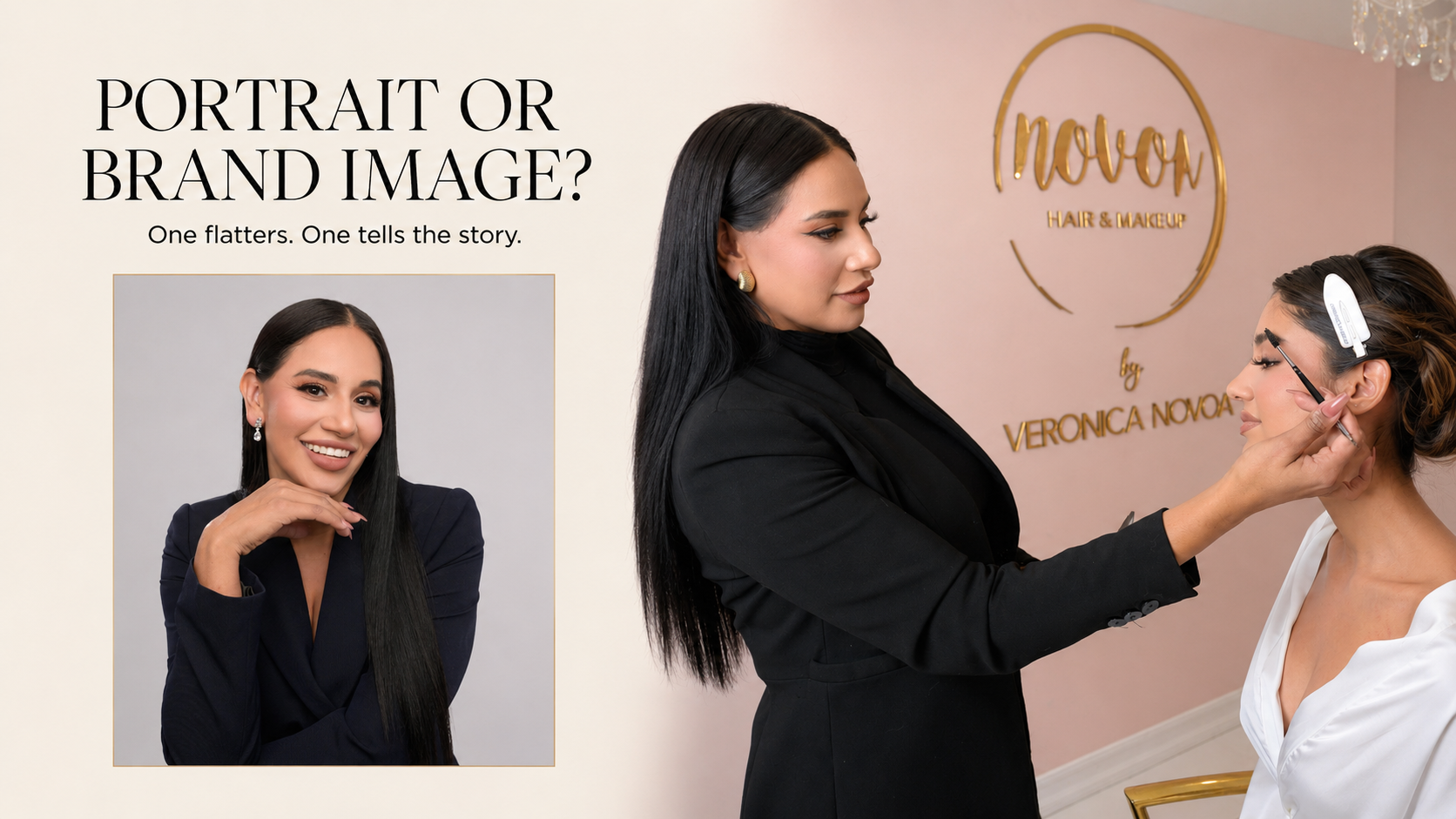
The gap between a photo that looks good and a photo that works is the gap between a portrait and a brand image. Most personal brand sessions sell the first and call it the second.
A portrait captures how you look on a good day. A brand image is built to do a job: tell a stranger what you do, who you help, and why you’re the one to hire, in the first fraction of a second they see you. The portrait flatters. The brand image sells.
What is a portrait, actually?
A portrait is a photograph of a person, composed to look good. Its job ends at likeness. A portrait answers one question, what does this person look like, and it answers it well. Wedding portraits, family portraits, the headshot on a corporate directory, all portraits. They exist to record a face.
Nothing is wrong with a portrait. A corporate employee who needs a clean headshot for an internal directory needs a portrait, and that is the right purchase. The problem starts when a business owner buys a portrait believing it will do the work of a brand image. It cannot, because it was never built to.
What makes a photo a brand image?
A brand image is built backwards from a business goal. Before the composition, before the outfit, the question is what this photo has to accomplish, who it is talking to, and what it needs to prove. The likeness is the starting point, not the finish line.
A brand image carries information a portrait leaves out. It signals what you do, who you help, and the feeling a future client gets working with you. A financial advisor’s brand image reads as calm and exact. A parenting coach’s brand image reads as warm and human. Same lighting quality, opposite messages, because each was planned around a different client and a different promise.
The test is simple. Cover the face in the photo. If the image still says something true about the business, it is a brand image. If it goes blank, it is a portrait.
Why the difference costs founders real clients
The cost shows up in the split second before anyone reads a word. People form a judgment about a face, competence, trust, likability, in about 100 milliseconds, according to Princeton research by Willis and Todorov. Your future client decides how they feel about you before conscious thought starts. A portrait leaves that decision to chance. A brand image aims it.
The web raises the stakes. About 94% of a first impression of a website is design and visual, not words, according to widely reported UK web-credibility research, and a visitor forms an opinion of a page in roughly 50 milliseconds. The photo is the loudest visual on most founder websites. It is doing the talking whether it was planned to or not.
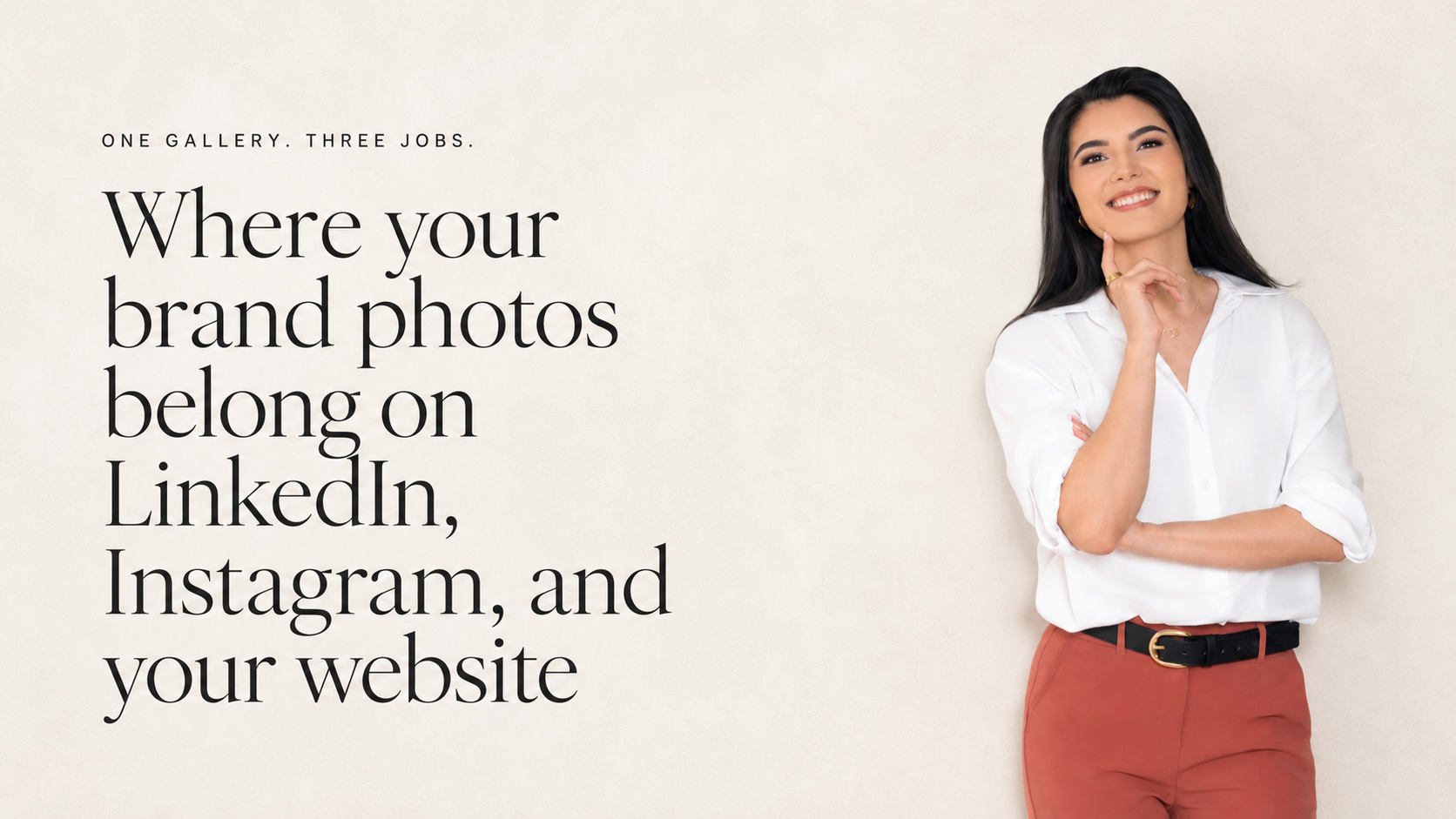
Consistency compounds all of it. A consistent visual brand presentation across touchpoints is linked to roughly a 23% increase in revenue, according to brand-consistency research from Lucidpress. A single flattering portrait cannot deliver that, because one photo is not a system. A brand image is designed to travel, the website, the sales page, LinkedIn, the press kit, and hold together everywhere it lands.
How do you turn a portrait into a brand image?
The strategy comes first, always before the camera. The reason most brand photos fail is not the photographer’s eye or the lighting. It is that no one decided what the photo was for before shooting it.
That decision is the ALIGN work. Get clear on who the business serves and what it promises, and every later choice, wardrobe, location, expression, gets a job. A photo planned this way is not a guess that happened to look nice. It is a designed answer to a question a real client is asking.
This is why a questionnaire cannot replace a strategy session. Handing a founder a form to fill out alone produces answers nobody knows how to use. Building the ideal client and the brand message together, in the room, is the only version that turns into brand images instead of pretty pictures.
What a brand image includes that a portrait skips
A portrait is one person against a background. A brand image shows the arc of the business. The founder doing the actual work. A real client interaction. The tools of the trade. The space where the business lives. Details that let a stranger picture what working together looks like.
That range is what feeds a marketing engine. One portrait gives you one post. A planned set of brand images gives you a website, a launch, and months of content that all sound like the same business, because they were built from the same strategy. The photo stops being a headshot and starts being the visual layer of the marketing.
FAQ
What is the difference between a portrait and a brand image?
A portrait records what a person looks like. A brand image is planned around a business goal, so it signals what you do, who you serve, and why to hire you. A portrait flatters the face. A brand image sells the business behind it.
Is a headshot the same as a brand photo?
No. A headshot is a clean, tight photo of a face, right for a corporate directory or a quick profile update. A brand photo is part of a planned visual story that shows the full arc of a business. A founder who is the face of her brand usually needs brand photos, and often a headshot too.
Can a portrait ever work as a brand image?
Sometimes, by accident, when the setting and styling happen to say something true about the business. Planning removes the accident. A brand image is designed to carry the message on purpose, so it works across a website, social, and press instead of only in one spot.
Why do my professional photos still not book clients?
Usually because they were shot as portraits, not brand images. Good light and a nice outfit make a flattering photo, but without a defined client and message underneath, the image has nothing specific to say. The fix is strategy before the shoot, not more photos.
How many brand images does a business owner need?
Enough to cover the real jobs: a website, a sales page, social posts, and a press kit. That usually means a planned set across a few settings, not one portrait reused until it wears out. The number comes from what the photos have to do, not a fixed rule.
The photo is only as good as the strategy under it
A beautiful portrait of a business owner is still a photo of a stranger when it says nothing about the business. The founders who get “you’re exactly who I needed” from their website are not more photogenic. Their photos were built to do a job.
Get clear on who you serve and what you promise, and the difference between a portrait and a brand image stops being abstract. It becomes the reason one photo sits in a folder and another one books the work.
Ready for photos that do a job, not just look good? Book a consultation
About the Author: Gaby Clark