Most women book a brand session the way they book a haircut. Pick a date, plan an outfit, show up. Then the gallery lands, the photos look good, and six months later the same three images are still doing all the work.
The photos were never the problem. The prep was. Not the wardrobe prep. The strategy prep that has to happen before the camera comes out.
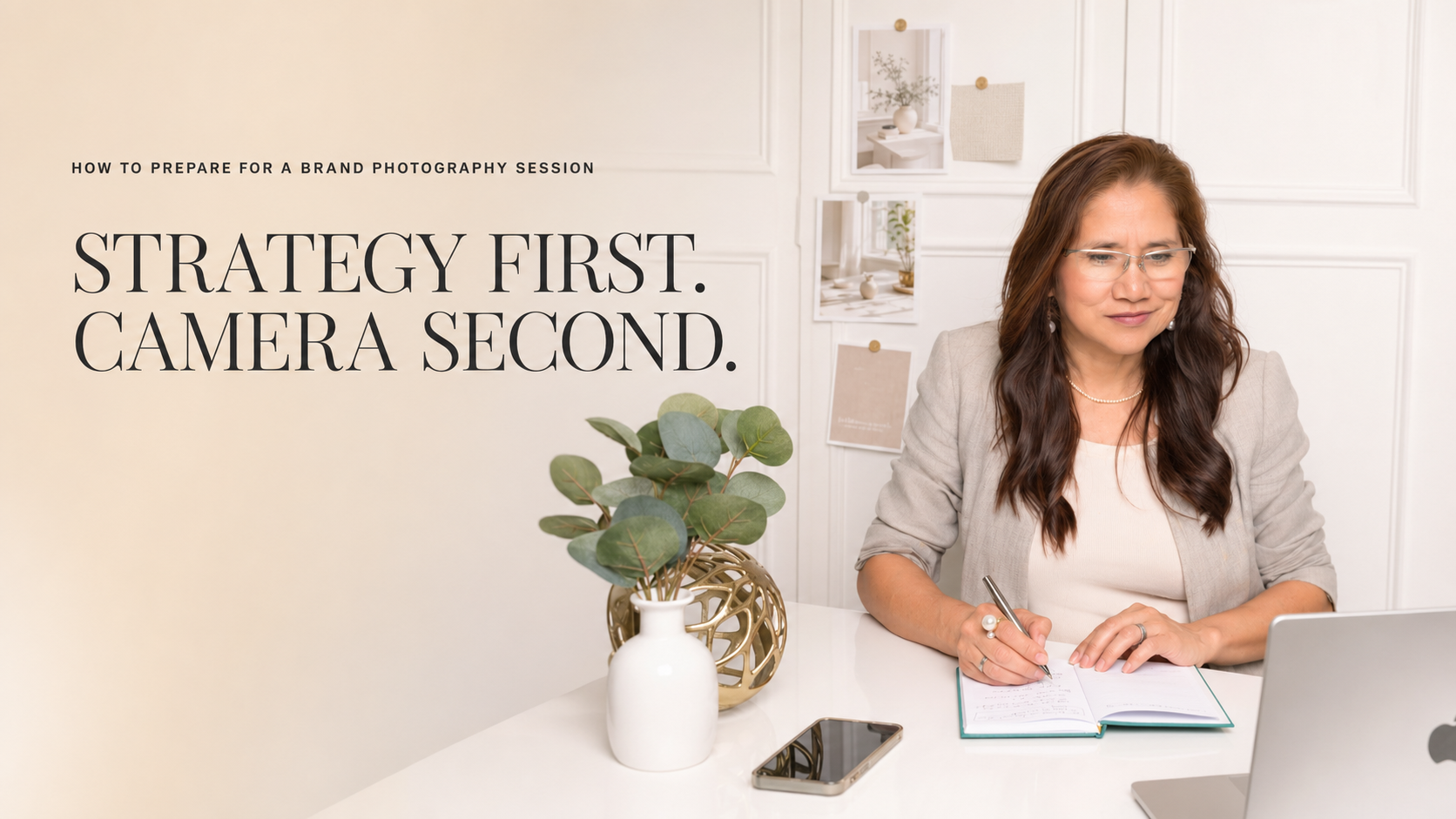
Preparing for a brand photography session means getting clear on who you serve and what you sell before you plan a single outfit. The real homework is defining your ideal client, your offer, and the exact places these photos will work. Wardrobe and location come after. Strategy first, camera second.
What does prep actually mean for a brand session?
Prep means strategy, not styling. Every founder assumes the work before a shoot is logistical: what to wear, where to stand, whether to get hair and makeup done. That work matters, and it comes second.
The work that decides whether your photos earn anything happens earlier. Who is the one person these images need to reach? What does that person need to believe before they hire you? What are you actually selling right now, this quarter, not two years ago? Answer those, and every outfit and location choice makes itself.
Why does the homework matter more than the outfit?
Because your future client decides in a blink. Research on first impressions found that 55% of first impressions are based on visual elements, and people form trust judgments about a face within about 100 milliseconds. Your photo is doing its job before anyone reads a word of your copy.
A great outfit on a photo built for the wrong audience still misses. A plain outfit on a photo built for the exact person you serve lands. The strategy is what points the camera at the right result.
What homework should you do before a brand photography session?
Four things, in this order.
Define your ideal client. Not “women in transition.” The real person. Her situation, what keeps her stuck, what that client types into Google at 11pm. When you know her, you know what your photos have to say.
Name what you sell right now. Businesses evolve faster than their photos. Map the offer you are selling today so the images support the sale you are actually making.
List every place these photos will work. Website, About page, LinkedIn banner, Instagram grid, sales pages, press kit, the next twelve months of content. The use cases decide how many looks, how many settings, how many verticals you need.
Then plan wardrobe and location. Once the first three are done, styling stops being guesswork. Each choice points back to a client, an offer, and a place the image will live.
What happens when you skip the strategy?
You get brand drift. The photos look like a version of you that no longer matches the business, and you feel it every time you send a press kit or update a bio.
You also get a dead gallery. Beautiful images, no plan for where they go, so they sit in a folder while you keep rationing the same three shots. Consistency is where the money is. Consistent brand presentation across platforms can increase revenue by up to 33%. A pile of unplanned photos cannot give you consistency, because nothing was built to work together.
How does a strategy-first photographer run the prep with you?
The homework does not get handed to you on a form. That is the difference. Most photographers who try to add a brand layer send a questionnaire and call it strategy. Nobody fills those out, and the ones who do rarely know what to do with their own answers.
A strategy-first session starts with an in-person strategy meeting. Your ideal client and your brand voice get built together, in the room, before anyone picks up a camera. That is the ALIGN phase of the Align. Shine. Scale. Method™, and it is the part that changes everything the shoot produces.
A health coach called wanting two headshots for a new website. On the phone the conversation turned into what brand photography actually is: photos of her with clients, working out, eating well, the full arc of her work. By the strategy meeting the coach realized the ideal client had never been thought about at all, only the work itself, never who it was for. Once the ideal client got built together, every photo from the shoot had a purpose. Website, blog, social. And the whole gallery got used without feeling buried.
That is not a rare gap. Across organizations, 95% have brand guidelines, but only 30% use them regularly. Owning a strategy and running your business on one are different things. The homework closes that gap before the shoot instead of after.
How far ahead should you start preparing?
Start the strategy conversation weeks before the shoot date, not the night before. The styling can come together quickly once the strategy is set. The clarity cannot be rushed, and it is the input everything else depends on.
If you are booking with a photographer who does not run strategy first, do the homework yourself and bring it. Define the client, name the offer, list the use cases. You will get more from any shoot when you walk in knowing exactly who the photos are for.
Why this is the whole game
Trust is the currency, and 81% of consumers say they need to trust a brand before they buy from it. Photos build that trust in the first 100 milliseconds, or they lose it. The homework is what decides which one happens.
Do the strategy first, and the session stops being a gamble on pretty pictures. It becomes a set of images with jobs, built for the person you most want to reach.
Frequently asked questions
How do I prepare for a brand photography session?
Start with strategy, not wardrobe. Define your ideal client, name what you sell right now, and list every place the photos will work. Website, social, press kit, sales pages. Once those three are clear, wardrobe and location choices become obvious. The strategy is the prep that decides whether the photos earn anything.
Is a brand photography session the same as a headshot session?
No. A headshot is a single polished photo of your face, and for a corporate role that is often all you need. Brand photography shows the full arc of your business: you doing the work, with clients, in the spaces your business lives. A founder who is the face of her brand needs the full story, not one headshot.
Do I really need a strategy, or is that an upsell?
The strategy is the part that makes the photos work. Without knowing who the images are for and where they will live, even beautiful photos sit unused. A strategy meeting that defines your ideal client and brand voice is the difference between a gallery you love and a gallery you actually use every week.
What should I bring to a brand session strategy meeting?
Bring your real business, not a polished pitch. Know what you sell today, who you most want to reach, and where you keep getting stuck in your marketing. A good strategy meeting builds your ideal client and brand voice with you in the room, so you do not need answers in advance, only honesty about where the business actually is.
How many photos do I actually need from a brand session?
Enough to cover your real use cases, not as many as possible. Map where the photos go first: website, LinkedIn, Instagram, sales pages, press. That list tells you how many looks and settings you need. A planned set of thirty images beats two hundred random ones every time, because each one has a place to work.
Ready to do the homework before the camera comes out? Book a call at gabyclark.com and start with the strategy that makes your photos worth the investment.
About the Author: Gaby Clark