Your business has a life. Clients coming through the door. The work happening at your desk. The messy middle of a project. The moment a customer’s face changes when something finally clicks. Brand photography is supposed to capture all of that. Most sessions capture none of it.
What you get instead is a row of the same face in different outfits against different walls. Polished. Professional. Empty. A stranger lands on your website, sees a nice portrait, and still has no idea what working with you looks like. So they keep scrolling.
Photographing the life of your business means capturing the full arc of how you work, not a set of headshots in different tops. You shoot the process, the client interactions, the spaces, and the small details, so a stranger visiting your site can picture what working with you actually feels like.
What does photographing the life of your business mean?
A headshot answers one question: what do you look like. The life of your business answers a bigger one: what is it like to be your client.
That second question is the one that books work. When someone considers hiring you, they are trying to imagine themselves in the room with you. A single portrait cannot carry that. A body of images can. Your hands mid-work. A real conversation with a client. The tools of your trade. The space where the work happens. The before and the after.
Think of it the way a house gets staged before it goes on the market. The furniture, the light, the table set for dinner, all of it exists so the buyer can see themselves living there. Brand photography does the same job for your business. The photos let your future client picture working with you before that first form ever gets filled out.
Why do outfit-variation headshots fall flat?
Most photographers shoot variations of one thing. Same person, new outfit, new background, and they call it brand photography. Really it is a headshot session with a bigger wardrobe.
A corporate employee needs a clean headshot for a company directory. That is the right tool for that job. A founder who is the face of her business needs something else entirely. The whole arc of the work, not a better-lit face.
The gap costs bookings. Only 19% of consumers find stock photography authentic, and a website full of interchangeable portraits reads the same way to a visitor: generic, safe, forgettable. When the images do not point to a real person doing real work, trust never gets a foothold.
What scenes make up the life of a business?
The life of a business is not one image. It is a set of moments that, together, tell someone what you do and how it feels to hire you. Group them like this:
- The work itself. You in motion, doing the thing you get paid for. A coach mid-session. A consultant at the whiteboard. An accountant walking a client through a plan.
- The client experience. Real interaction, real faces, the exchange at the center of your business.
- The space. Where the work lives. An office, a studio, a kitchen, a boardroom. Place tells a story fast.
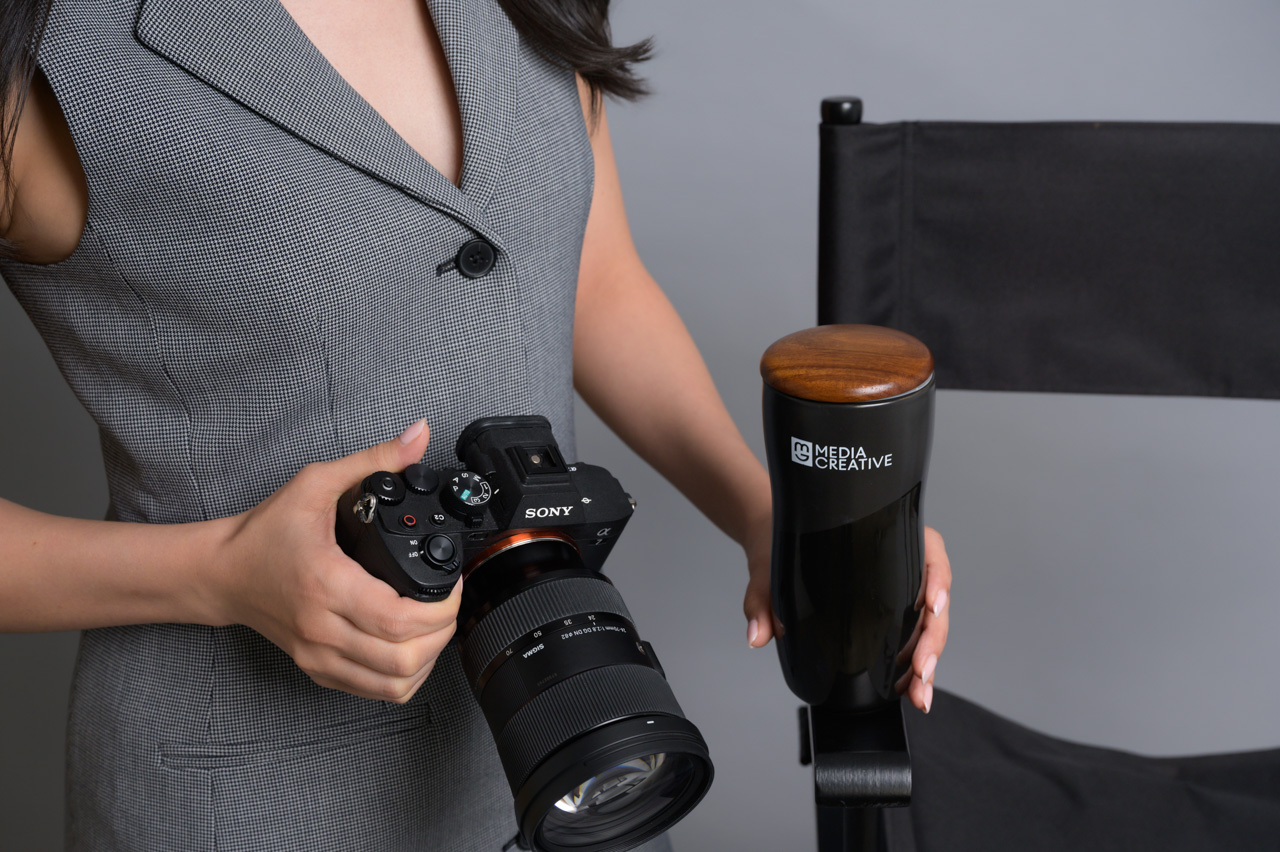
- The details. The tools, the products, the notebook, the setup. Small frames that fill a feed and a website without another portrait.
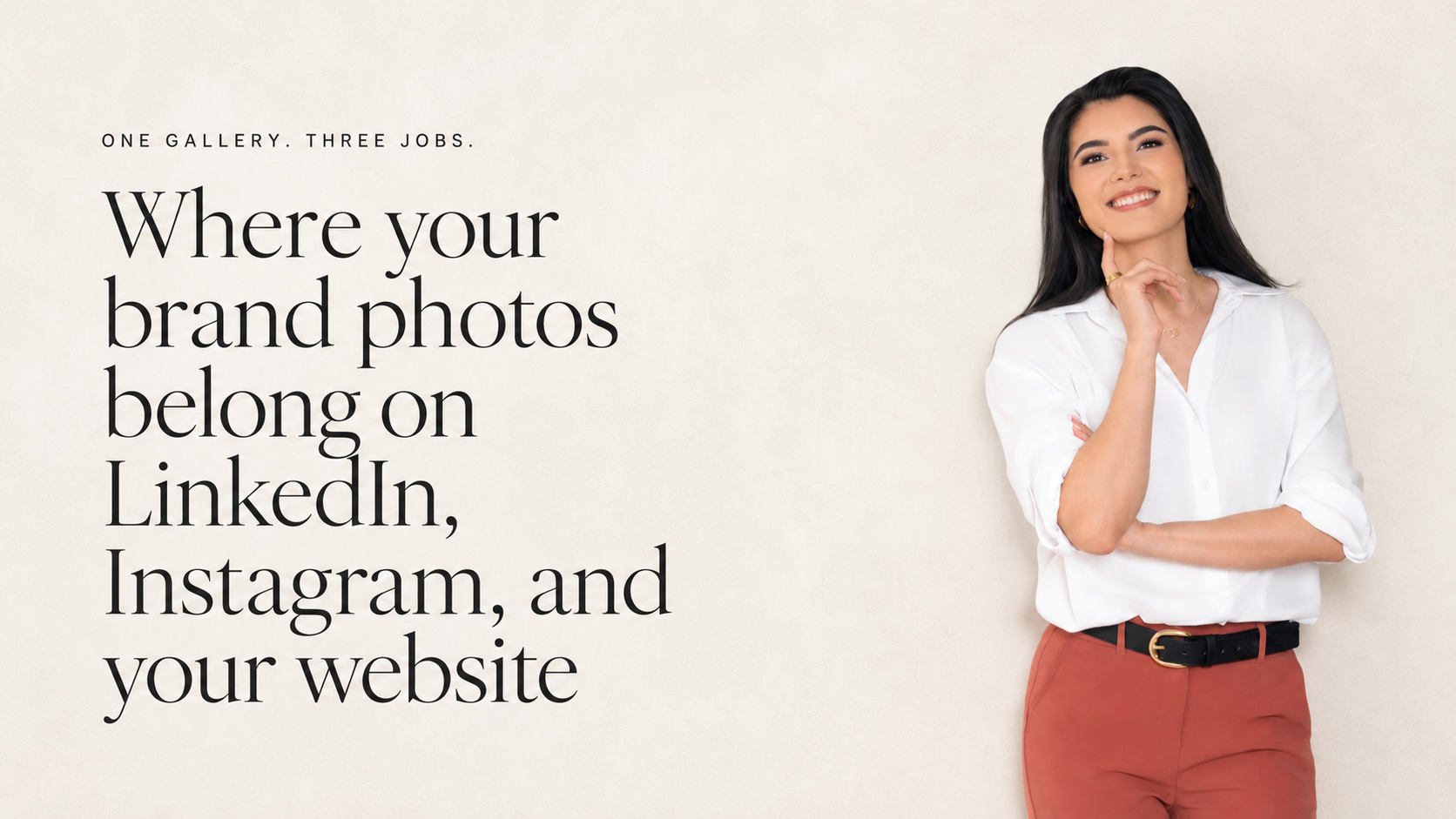
- The person. Yes, the portrait too. It belongs in the mix. It just cannot be the whole mix.
A session built around these five buckets gives you a library that covers a website, a sales page, months of social, a press kit, and an About page you stop dreading.
How do you plan a session that captures the arc?
The photos only work when the strategy comes first. Before the camera comes out, you get clear on who you serve, what you sell, and where each image will live. That is the ALIGN part of my Align. Shine. Scale. Method™, and it is done together in a strategy meeting, not on a questionnaire you fill out alone.
Most owners skip this and hand a photographer a vague brief. Then they get pretty pictures with no plan behind them. When you map the ideal client, the brand voice, and the exact use cases first, every shot on the day has a purpose. You walk out building a visual story your marketing can run on for a year.
The lightbulb moment usually lands in that first meeting, when an owner realizes the ideal client was never actually defined, so the photos had no one specific to talk to. Once that gets clear, every location, outfit, and scene choice after it gets easy.
What the numbers say about authentic imagery
The preference for real, working images is not a hunch. A Getty Images study of 30,000 adults across 25 countries found that 98% of consumers say authentic images and videos are essential to establishing trust. Trust is the whole game for a service business.
Behind-the-scenes content pulls people in too. 21% of consumers say they are more likely to follow a brand that posts behind-the-scenes visuals. And original photography drives 35 to 45% higher engagement than stock imagery, per Brand Photography ROI research. A face in a suit against a grey wall cannot do that. Your work, your space, and your clients can.
How one health coach’s session covered her whole practice
A health coach called wanting two headshots for a new website. On the phone, the reframe happened: brand photography would show her with clients, working out, preparing food, the full arc of the practice. By the strategy meeting, a realization landed. This coach had never once thought about her ideal client. Only about the work itself, never about who it was for.
Once the ICA got built together, every photo had a job. Website. Blog. Social. The marketing suite meant those images could go to work without her feeling buried. Two headshots would have covered an About page. The life of her business covered her entire brand.
FAQ
What is the difference between brand photography and headshots?
A headshot is a single portrait, right for a corporate directory or a team page. Brand photography captures the full arc of a business: the work in progress, client interactions, the spaces, and the details, plus portraits. It shows a stranger what hiring you feels like, which a lone headshot cannot do.
How many photos do you need from a brand session?
Enough to cover every place your brand shows up. A website, a sales page, an About section, a press kit, and months of social posts. That usually means a set spanning the work, the client experience, the space, the details, and portraits, so you stop rationing the same three images across every platform.
Do I need a strategy before a brand photography session?
Yes. Strategy first is the whole difference between pretty pictures and photos that book work. Before the shoot, you define your ideal client, your brand voice, and where each image will live. Without that, you get a beautiful gallery with no plan and no purpose behind a single frame.
Can AI photos replace a brand photography session?
No. AI can generate a face, but it cannot capture your real clients, your real space, or the real work you do. Without brand strategy underneath, AI photos read as generic, and consumers increasingly distrust images they sense are synthetic. The strategy and the real arc of your business are the parts that convert.
Ready to photograph the full life of your business? Book a call, and we start with strategy before the camera ever comes out.
About the Author: Gaby Clark