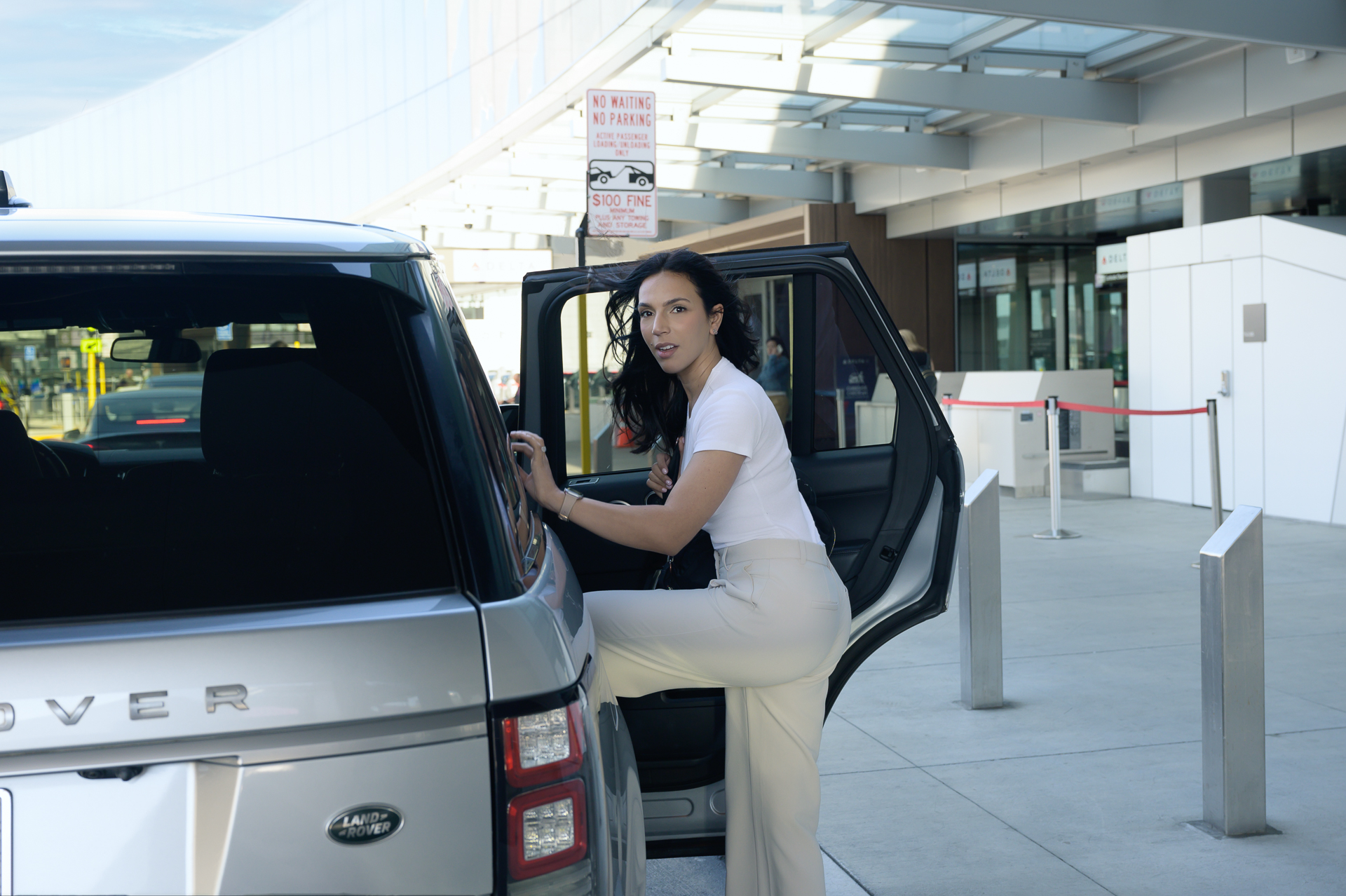
A woman who runs a high-end financial advisory calls. A brand session is on the table. The early focus goes to outfits, to which camera lens looks most flattering. The location is an afterthought.
By the time the strategy session wraps, the answer is clear: the location is the first thing potential clients read. Before the headline. Before the rate card. Before they get to the bio.
Location is a signal.
Why location does more work than most people realize
Stanford’s Web Credibility Research found that 75% of users form credibility judgments about a brand based primarily on its visual presentation. They’re not reading the copy first. They’re reading the image.
A 2023 PLOS ONE study on first impressions found that backgrounds featuring books, natural elements, or professional work materials significantly improved how viewers rated a person’s trustworthiness and competence, compared to neutral or cluttered environments. The researchers found that background was a stronger credibility signal than clothing choice.
In photography, the same principle applies. The location you choose for a session tells a story about where your work happens, who you serve, and how seriously you take the visual layer of your brand. A brand built around high-touch client service and strategic expertise calls for a different setting than one built around creative freedom and artistic output. The photo doesn’t need to explain this. The location communicates it.
The four questions to ask before choosing a location
1. What environment does your client already associate with expertise?
Your ideal client has a picture in her head of what an expert in your field looks like. A therapist looks one way. A business strategist looks another. A real estate developer looks different from a health coach.
Before picking a location, get specific about that picture. A Bay Area financial consultant’s client probably associates credibility with clean architectural lines, natural light, polished stone or wood. A brand strategist’s client might associate it with a working desk, books, whiteboards, the visual texture of real thinking. A wellness practitioner’s client might expect warmth, plants, natural materials.
The goal is not to copy a trope. The goal is to meet the expectation just enough that the credibility registers, then bring in enough of your personality that the photo reads as you. A location that only hits the expected marks looks stock. One that only hits personality risks reading as amateur.
2. Where does the real work happen?
Brand photography should show the full arc of a business, not just its polished exterior. One of the most underused location decisions is the actual working environment: the desk where you write the proposals, the room where the client calls happen, the space where the creative work gets done.
Commercial photography with authentic working environments drives up to a 70% increase in consumer engagement compared to staged studio shots, according to data from VisualFizz. The reason is simple: people trust what feels real.
Most founders have complicated feelings about their working environment. They assume a home office is automatically unprofessional, or that the work spaces they actually use are not interesting enough to photograph.
They’re almost always wrong. A real desk with actual books and working materials signals authenticity in a way a cleared-off rented studio space does not. The work that happens there, that’s the product. Showing it is branding.
3. What do you want a potential client to feel at first glance?
This is a different question from what you want them to think. Thought is secondary. Feeling is immediate.
A potential client who lands on your website scans images before reading. In that window, the location and its visual language either produce a match or they don’t. Think about three words that describe what your best clients feel when they work with you. Clarity? Confidence? Trust? Then ask whether the location you’re considering produces that feeling visually.
A cluttered background may read as honest and human, or it may read as chaotic. Natural light may read as warm and accessible, or as casual to the point of unserious. These calls are specific to your business and your ideal client. No universal answer exists. That’s exactly why location strategy belongs in a planning session, not a last-minute Instagram scroll.
4. Does the location give you range?
A single session should cover multiple use cases: website, social media, press and media, sales pages, email headers, and ongoing content. That requires visual variety. One location with no range produces one visual texture across everything, and most clients exhaust it faster than they expect.
A good brand session location has at least three distinct zones within it , different light, different background, different feel , so the images read as a library instead of a series of the same shot.
In the Bay Area, that might mean a glass-walled building that gives you editorial daylight, an exterior courtyard with architectural detail, and an interior area with warmth and texture. Or a home studio that has a working corner, a light corner, and a lifestyle corner. The specific spaces matter less than whether they give you contrast.
Common location mistakes that cost you clients
Choosing for convenience, not for strategy. The nearest coffee shop has variable lighting, unpredictable noise, and backgrounds you don’t control. Convenience is not a visual brand decision. If you’re making location choices based on what requires the least effort to organize, you’ll end up with photos that look exactly like that.
Over-relying on outdoor settings. Natural outdoor locations photograph beautifully and they also look very similar to each other. A park bench session looks like thousands of other park bench sessions. If outdoor locations are part of the plan, they need to be specific and meaningful to your work: the neighborhood you serve, a space connected to your story, something with detail and reason.
Ignoring what the background says. A stacked pile of unread business books says one thing. An organized work surface with two or three well-chosen objects says something else. A window with a city view says something different from a window with a garden view. Location planning at this level of detail is what separates photos that tell a story from photos that merely exist.
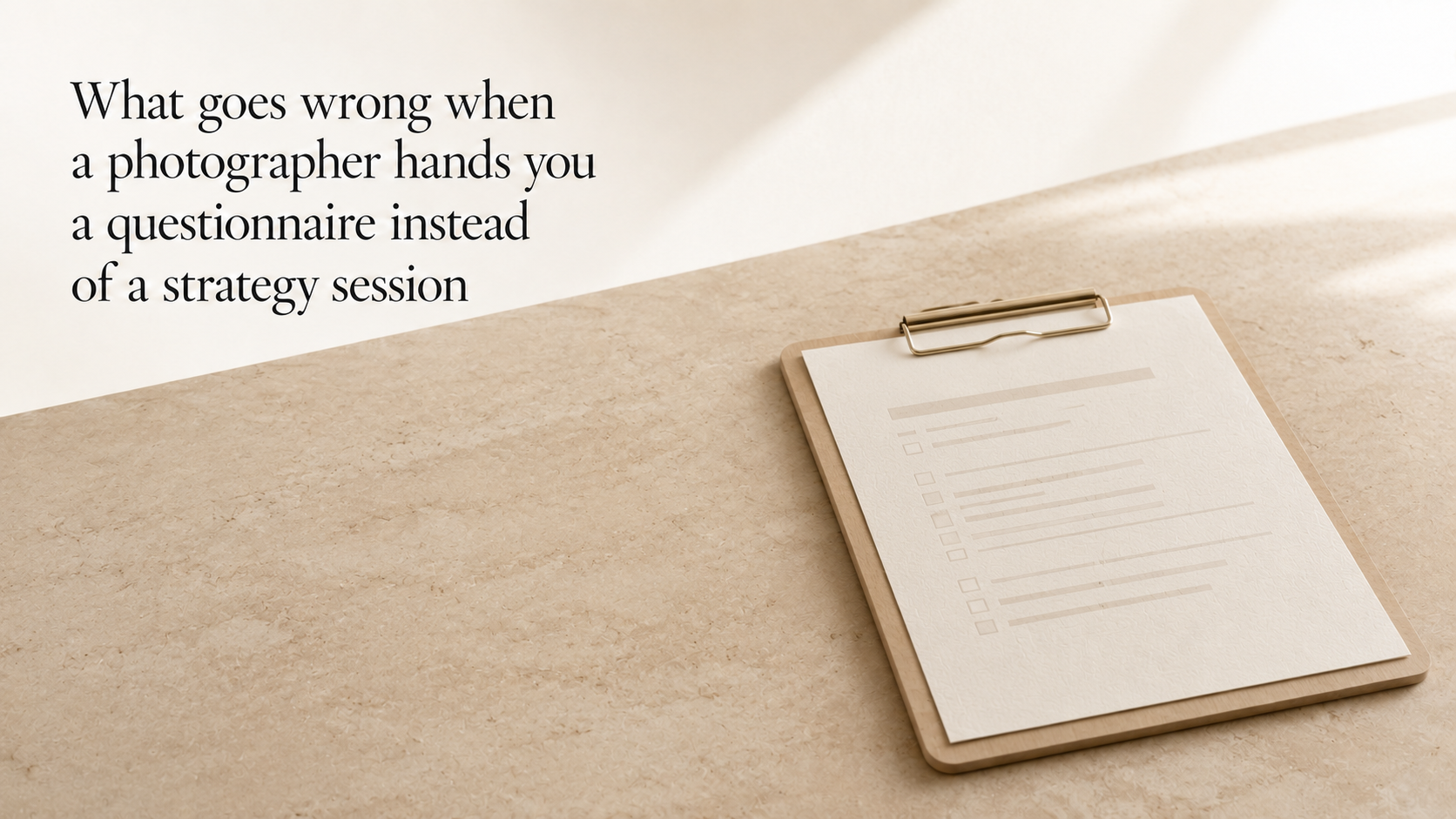
Skipping the strategy conversation altogether. Most photographers hand clients a questionnaire and call it a planning session. The client fills it out alone, usually at the last minute, without the context to know what answers would produce better photos. Real location strategy is built in a conversation, not a form. The right questions have to be asked in real time, with someone who knows both the photography and the brand.
How location planning works in the three-phase method
The SHINE phase of the session is where location strategy lives, but it starts in the strategy phase. Before the shoot, we build the brand strategy together: the ideal client, the brand voice, the positioning. Location choices come from that, not before it.
By the time we’re planning locations for a session, the ICA is clear, the message is clear, and the use cases are defined. Every location decision is filtered through those answers. We’re asking: does this location tell that client’s story? Does it produce the feeling that brings this specific ideal client closer?
The goal is not beautiful photos. Beautiful photos are table stakes. The goal is photos that work: that load on the website and make a referred lead feel like the right person has already been found, that land on LinkedIn and read as someone to take seriously, that give you enough content to build 90 days of marketing without running out.
That kind of library starts with the right location strategy. And the right location strategy starts before the camera comes out.
Book your consult at gabyclark.com.
FAQ
Does the location have to be professional-looking?
Professional is a feeling, not a formula. A home office can read as polished and authoritative with the right staging and light. A coffee shop can read as relaxed and approachable with the right framing. The question is whether the setting matches the brand you’re building for your ideal client, not whether it passes some generic standard of professional appearance.
How many locations do we need for one session?
Most brand sessions use two to three distinct spaces. The goal is visual range for ongoing content, not variety for its own sake. What matters is whether the locations give you the contrast and use-case coverage the brand actually needs.
Can I use my home for a brand session?
Yes, frequently. Many of the strongest brand sessions for service-based founders happen in home offices or home studios that have been intentionally staged. The key is that the space reflects the business and the client, not just the personal life. We work through this in the strategy session.
What if I work remotely and don’t have an office?
Remote founders often have the most interesting location options because the work can happen anywhere. The question is: what locations tell the story of how you work and who you serve? That might be a co-working space, a specific neighborhood, a home setup, or a combination of spaces that together tell a complete story.
How far in advance should we plan locations?
The strategy session happens before any location is confirmed. Once we’ve worked through the brand, ideal client, and use cases, location scouting is usually a 1 to 2 week process depending on what the shoot requires.
About the Author: Gaby Clark