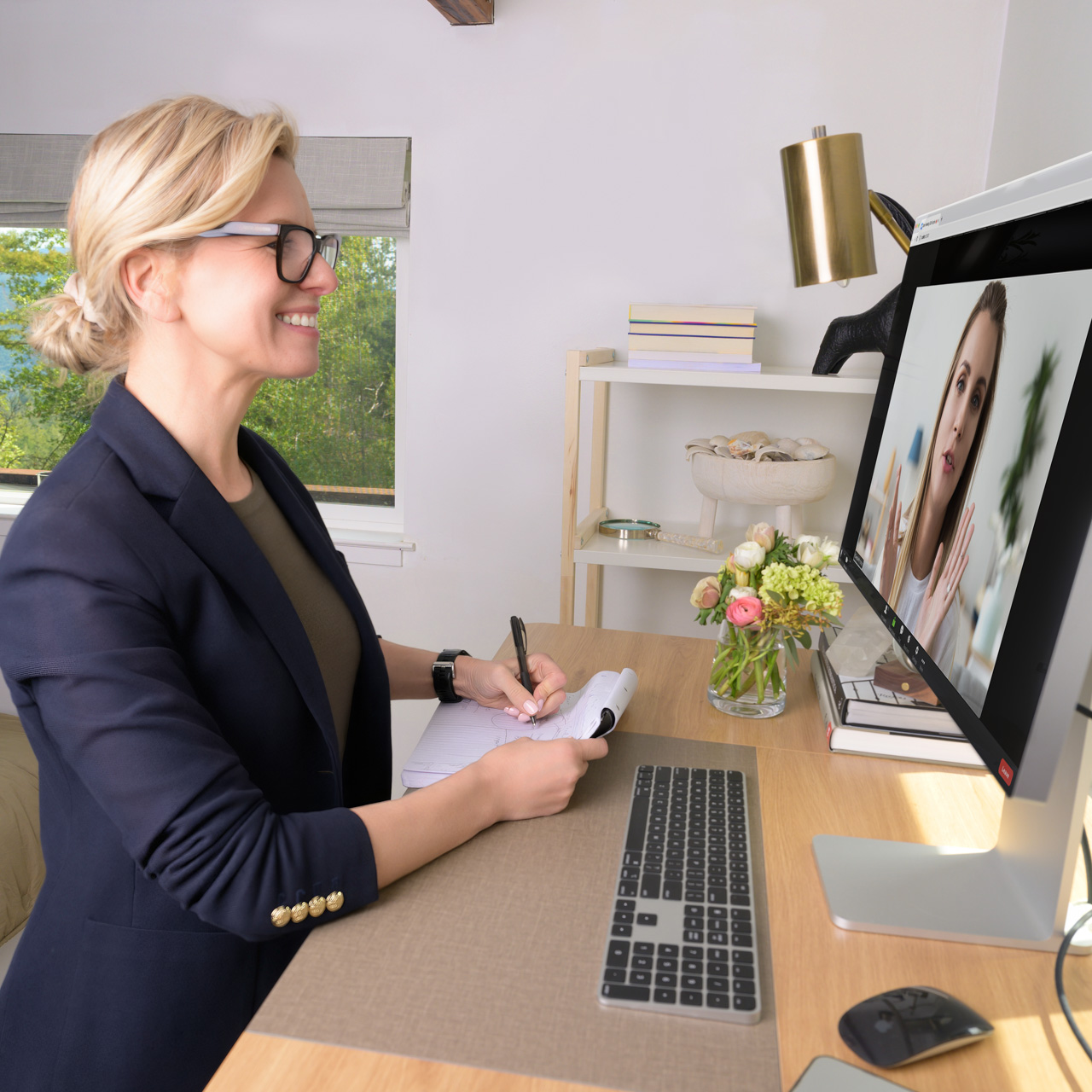
The outfit question comes up in every single session consultation.
“I have no idea what to wear.” It’s usually the third thing a client says, after the introduction and the explanation of why booking kept getting pushed back. By the time the call happens, the closet spiral has already started: which blazer reads “credible” on camera, whether that pattern looks strange in photos, what to do about the fact that the website colors and the wardrobe have never been in the same conversation.
The short answer: wardrobe matters, and it’s plannable. The longer answer: the outfit itself is not the first decision. The brand strategy is.
Research from the University of Hertfordshire found that people form complex judgments about appearance, including credibility, competence, intelligence, and trustworthiness, in under half a second. Clothing carries those signals before a single word is spoken. For a businesswoman building a personal brand, every photo that represents the business carries those signals too.
The goal of wardrobe planning in a brand session is not to look fashionable. The goal is to make sure the viewer’s eye goes where it belongs: to the face, the expression, the story.
What the camera does to clothing
The camera does not see fabric the way the eye does. Certain colors, patterns, and textures that look perfectly fine in person create problems on a digital screen.
Tight patterns, things like fine pinstripes, small houndstooth, dense polka dots, or tightly spaced checks, create a moire effect when viewed digitally. The fabric appears to ripple, vibrate, or produce wavy interference lines that have nothing to do with the original garment. It is an artifact of how pixels interact with repeating patterns at certain frequencies. The viewer notices the optical noise before the person wearing it.
Highly saturated colors create similar problems. A neon yellow blazer that reads as energetic in a meeting reads as a distraction in a frame. The eye goes to the color, not the face.
Color influences up to 90% of first impressions in branding (Amra & Elma, 2026). For a brand photo session, that 90% effect should be working in favor of the message.
The color conversation
No single list of good colors exists for every session. What works depends on the brand palette, the location, the lighting, and skin tone. What holds consistently across all of them:
Muted tones outperform saturated ones. Burgundy rather than cherry red. Forest green rather than lime. A deep teal rather than turquoise. The muted version of almost any color photographs with more depth and fewer distractions.
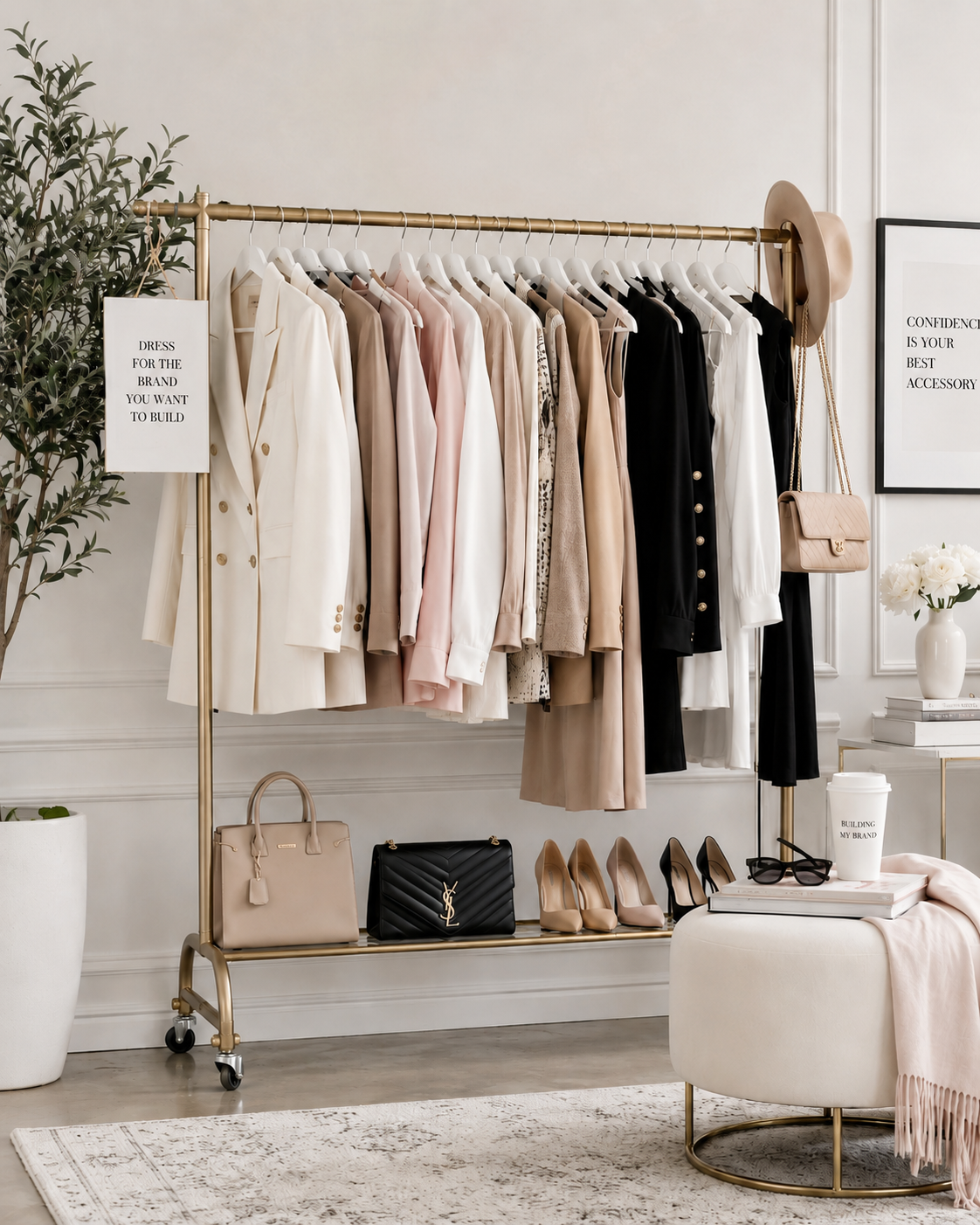
Neutrals build timeless galleries. Navy, camel, cream, stone, charcoal, and warm white give galleries longevity. A trend color from a specific season can date a gallery in two years.
Wear colors that connect to the brand palette. A client whose website is built around soft sage, warm white, and warm wood tones should bring those colors into the session wardrobe whenever possible. The photos land on the website, social media, and email headers. When the color story is consistent across all of it, the brand reads as coherent.
Skip white near the face. White near the jaw can blow out in natural light, flatten the complexion, and create contrast that draws attention away from the eyes. An off-white, ivory, or cream does the same job without the exposure issues.
Textures, layers, and what photographs beautifully
Textures photograph well. Waffle knit, chunky weave, velvet, linen, silk, corduroy, and subtle brocade all add visual richness without creating pattern problems. A simple cream blouse in silk tells a different story than the same blouse in cotton: the light catches differently, the movement reads differently, the whole photograph feels different.
Layers build images with dimension. A blazer over a fitted top, a tailored vest over a blouse, or a well-structured jacket with interesting lapels gives a photograph layers of visual information without requiring anything elaborate.
Accessories matter more than most clients expect. A meaningful necklace, an interesting earring, a watch with presence: these small choices build personality into a frame and give the eye something to notice beyond the broad strokes.
The single most useful wardrobe question for any brand session: “Would I want to see this on someone who does what I do, at the level I am at now?” If the answer is yes, it is worth bringing.
Bring more than you think you need
The standard recommendation for a full brand session is three to five complete outfits. Not three separate tops. Three complete looks: outfit, accessories, shoes, everything together.
The reason is variety without chaos. A gallery that pulls from one or two outfits with slightly different styling can feel thin. A gallery that pulls from three or four deliberately different looks, some polished, some approachable, some in-the-work, gives the client real range for the year ahead.
Most clients underbring. Two outfits go in the bag, the session plan shows up, and the realization hits: the website needs a hero image in one register, LinkedIn needs something more formal, and Instagram needs something that reads warmer and more personal. Three looks barely covers it.
Bring more. Edit on the day.
The order of operations
The wardrobe conversation happens after the strategy session, and the reason is simple.
Before anyone decides what to wear, the session plan defines who the photos are for, what they need to communicate, and what platforms they are going to live on. The ICA, the brand voice, the use cases for each image: all of that gets mapped out first. Then the wardrobe fills in around those decisions.
A client whose session plan includes photos for a high-ticket consulting sales page, a speaking bio, and a book proposal needs to dress differently for each purpose, not dramatically, but intentionally. The sales page image calls for authority. The speaking bio calls for warmth and presence. The book proposal calls for something personal and slightly relaxed. One outfit does not do all three jobs.
Wardrobe planning inside a strategy framework means every outfit has a purpose before shoot day arrives. Nothing gets decided in the parking lot.
What to skip
A few patterns come up consistently, regardless of how good they look in real life.
Skip logos and branding from other companies. A shirt with another brand’s logo advertises that brand in every image. Brand photography builds the brand of the person being photographed, not anyone else’s.
Skip extremely trendy pieces for primary looks. A current-season blazer with a very specific silhouette is fine as one layer in one look. As the hero outfit, it can date the gallery faster than any technical issue. Primary looks should hold up for two to three years.
Skip overly casual options. The bar for casual in a brand session is different from everyday casual. Jeans and a fitted blazer: absolutely appropriate. A worn crew-neck with joggers: not unless the brand specifically calls for it.
Skip anything that creates discomfort on camera. Confidence reads in a photograph. A blazer forced into the bag because it looks good on a mood board will create stiff expressions in every single image taken while wearing it. Clothing has to fit the body and the personality.
FAQ
Can I wear all-black outfits?
Black photographs well and gives a clean, authoritative look. The limitation is variety: an all-black gallery can feel one-dimensional. Black works well as a foundation layer, especially with interesting textures or accessories to break it up.
What about jewelry and accessories?
Yes, and plan them with the outfits. Jewelry photographs with presence, so oversized or statement pieces read on camera in ways they sometimes do not in person. Simple jewelry can disappear. Plan each look with its full accessory set before the shoot.
Does hair and makeup affect the wardrobe choices?
Yes. The full picture includes hair, makeup, outfit, and location. Professional HMUA on shoot day makes the whole system work together. The consult with hair and makeup before the shoot is a good moment to confirm that everything reads as one coherent look, not three separate choices that happen to be worn by the same person.
How far in advance should I plan the wardrobe?
At least two weeks before the shoot. That leaves room to order something online and return it if it does not work, have something tailored if needed, and swap out anything that photographs poorly in a test. Day-before planning leads to day-of panic.
Can I bring more outfits than planned?
Always. Bring what the strategy calls for, then add one or two extras in case something does not land on the day. Editing down on shoot day is easy. Running out of options is not.
The session starts before the camera comes out
Every session at Gaby Clark Photography begins with an in-person strategy meeting. That is where we map out the ICA, the brand voice, the use cases for every image, and the full session plan, including wardrobe. By the time shoot day arrives, every outfit has a job.
Wardrobe planning is a brand clarity question. The right answer depends on knowing who the audience is, what needs to be communicated, and what the business is building toward.
About the Author: Gaby Clark