ix figures means the business is real.
And at some point, the work is real enough that quality stops being the question. You know it’s good. Your clients know it. The problem is the people who don’t know you yet. The ones who land on your website, click your About page, and form their opinion in under three seconds based on a phone photo from 2021.
Personal brand photography is a question consultants start asking when they notice a gap: between who they’ve become and what their brand looks like. The investment is real. So is the question. Is it worth it?
The honest answer: it depends entirely on what you’re buying. If you’re buying photos, probably not. If you’re buying a visual marketing system built around who you are and who you serve, almost always yes.
What the data says
LinkedIn profiles with a professional photo get 14 times more profile views than profiles without, according to LinkedIn research compiled by Salesso.com in 2026. For a solo consultant whose next client Googles your name and clicks through to LinkedIn, that visibility gap is a revenue gap.
The second number worth sitting with: 86% of potential clients screen profiles in 30 seconds or less, using the photo as the primary anchor for their first impression. A five-year-old headshot from a hotel lobby is doing your closing work before you ever get on a call.
A 2025 Edelman/LinkedIn Digital Trust study found that over 80% of people are more likely to engage with or hire a professional whose principal is visibly credible online. For a solo consultant, you are the principal. The question stops being whether your photo matters. The question is how much it’s costing you that it’s not working.
What most consultants get wrong about this investment
The assumption most solo consultants carry into this decision is that brand photography means better headshots. A nicer background. Maybe a few outfit changes.
Brand photography shows the full arc of what you do. The work itself, the environment where the thinking happens, the expression of expertise that a static portrait can’t capture. When a potential client lands on your site, the photo that converts is the one where they can picture working with you, not just looking at you.
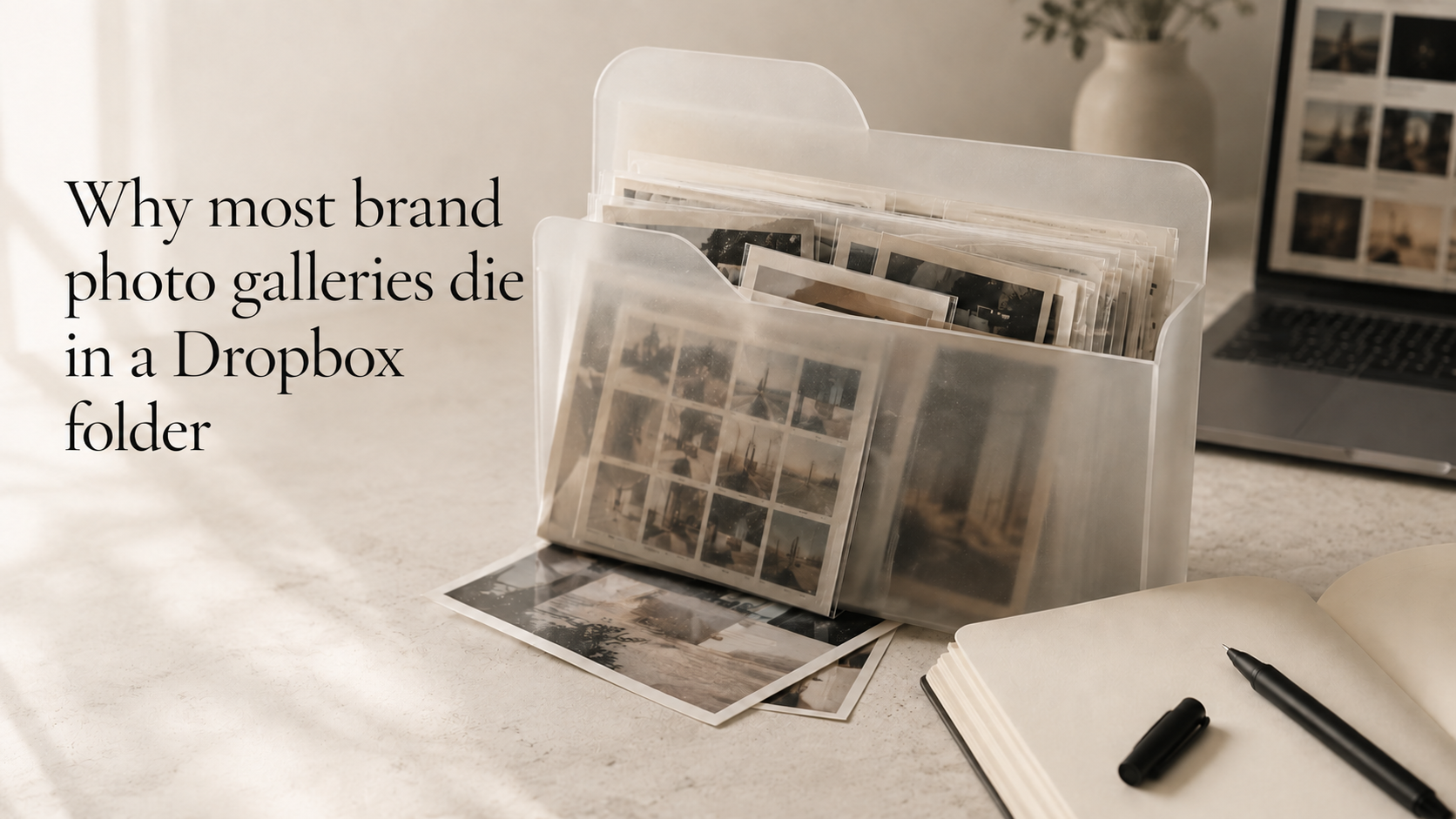
The photographers who are cheapest in this category are cheapest because they’re shooting variations of the same portrait and calling it brand photography. You leave with a gallery and no clear sense of what any of the images are for. They end up in a Dropbox folder because there was never a plan for them.
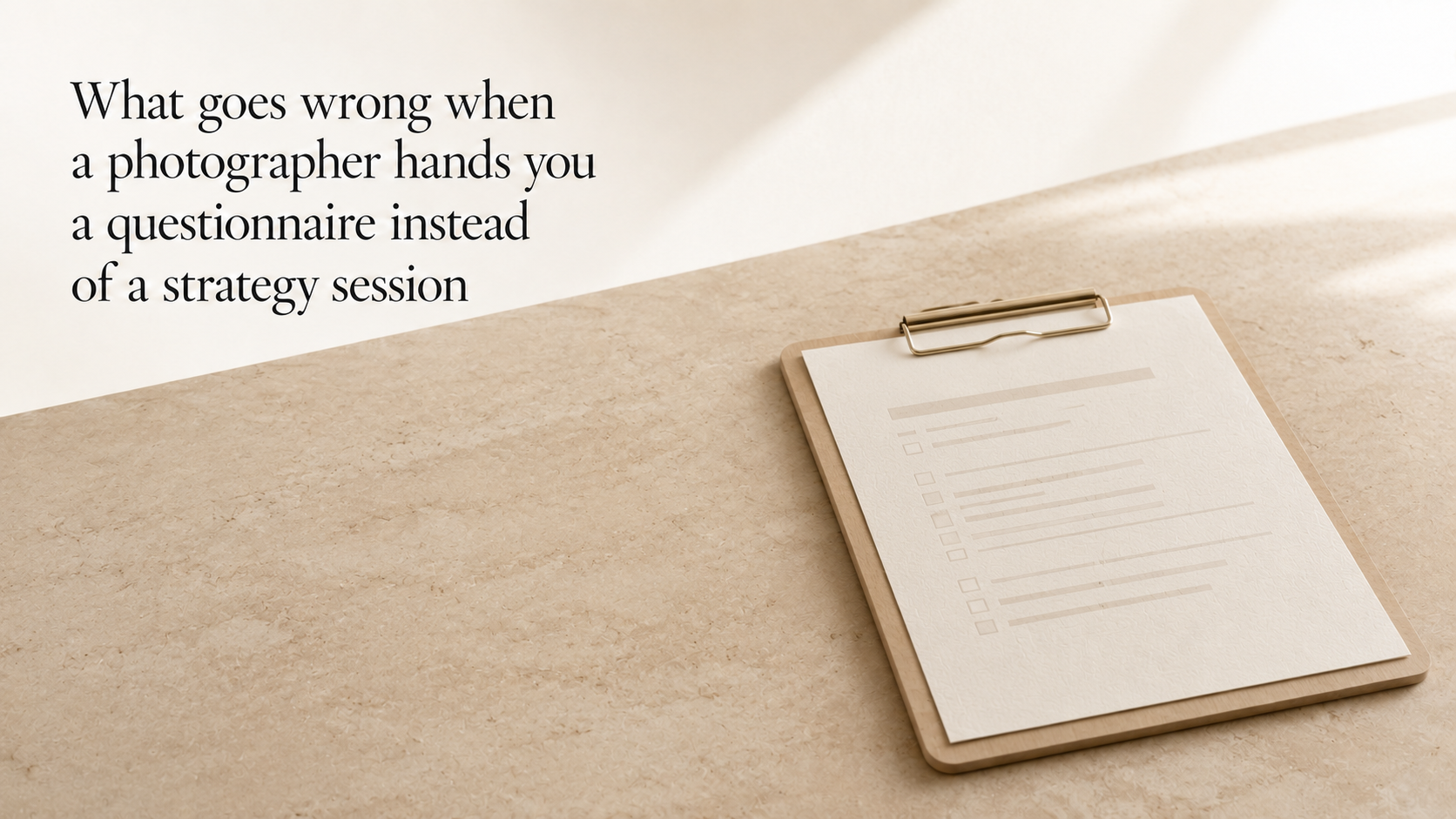
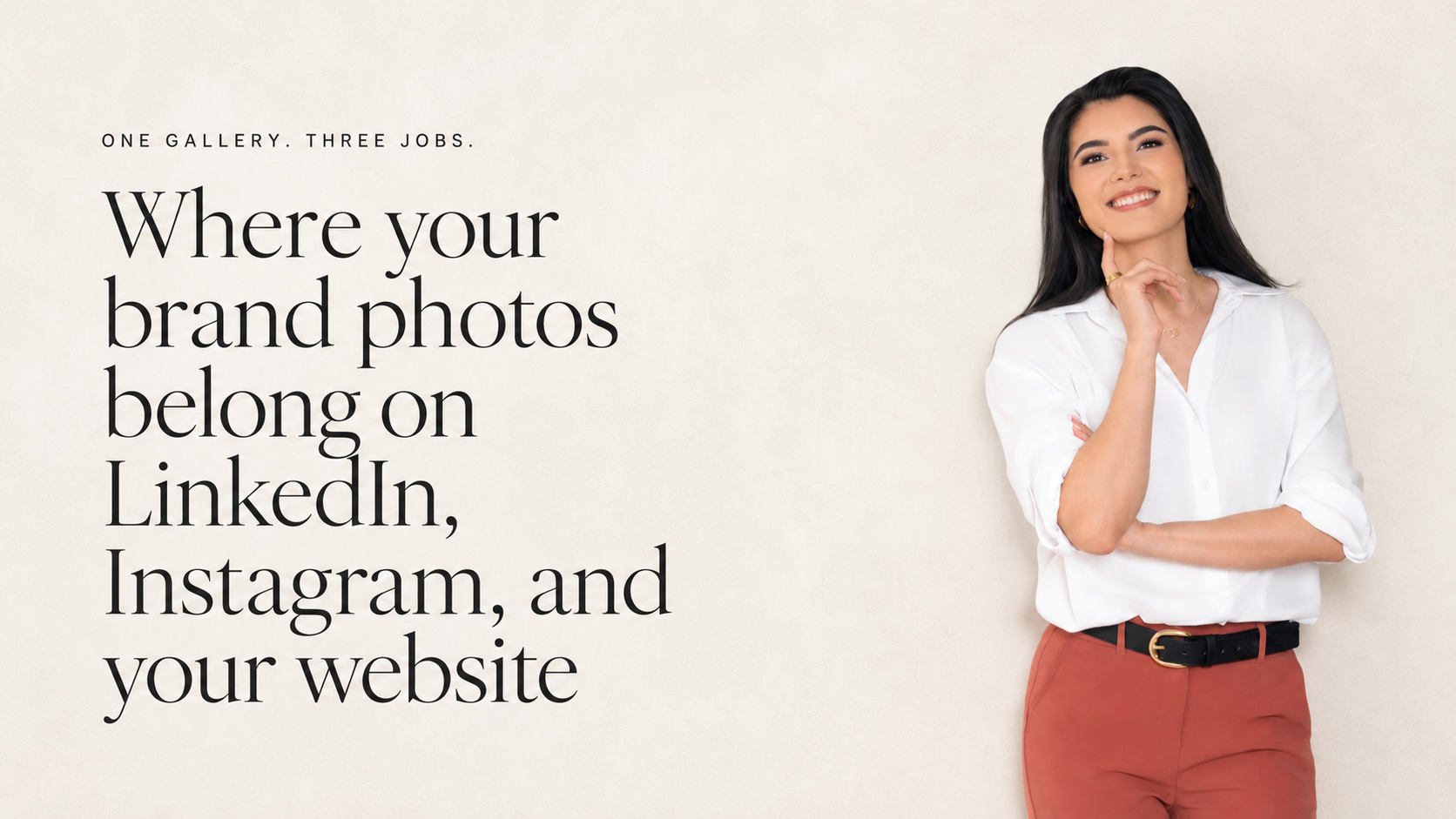
Strategy has to come before the camera. Not in the form of a questionnaire you fill out at midnight the week before the shoot. A real conversation. Who your ideal client is, what your website needs to say to that person, what images on your LinkedIn header, your sales page, your press kit, and your email signature need to communicate. When that work is done first, every photo has a job. And photos with jobs get used.
The ROI calculation for a solo consultant
If you bill at $15,000 to $25,000 per engagement, one new client who said yes because your brand looked the part pays for the entire photography investment and more. An analysis of 847 businesses found that companies investing in professional photography recovered the cost within 47 days on average, through improvements in conversion rates.
For service businesses where the sale happens before the proposal, the math is different than for a product company. The photo is not closing the deal. The photo is getting you the call. If you’re not getting the call from warm referrals who looked you up before reaching out, and you know your work is strong, the visual layer is the most likely place to look.
The scale piece nobody talks about
Most photographers stop at gallery delivery. You get the photos, you update your headshot, you swap the LinkedIn header, and three months later you’re back to wondering why content feels hard.
The consultants who get the most out of a personal brand session pair it with a marketing system. A Canva template suite built around the images so every piece of content on every platform looks like it came from the same brand. AI tools that help you write bios, captions, LinkedIn posts, email campaigns, and website copy using those images as the visual anchor.
The photos become the engine. Content runs through them. You stop starting from zero every time you sit down to post something because the raw material is already there.
At Gaby Clark Photography, the Scale phase of every session includes the Canva template suite and the AI Marketing Suite, eight named AI experts that handle every marketing task after the shoot: bios, social media planning, content repurposing, email campaigns, website copy, PR kits, video scripts, and keynote presentations.
What to ask before you book
Three questions clarify whether you’re ready:
First, do you know who your ideal client is? Not a category but a specific person with a specific fear and a specific reason they pick up the phone and call you. If that’s fuzzy, a strategy session before the shoot will do more for your business than the photos themselves.
Second, are you ready to be visible? Many consultants book photography sessions and then don’t use the images because something else is holding them back. The photos remove the visual excuse. The rest has to be willing to show up.
Third, what is the plan for the photos after delivery? If the answer is “I’ll figure it out,” find a photographer who builds that plan into the process. Photos without a use plan end up where most galleries end up: downloaded once, organized into a folder, rationed for a year until they feel as dated as the photos you started with.
Frequently asked questions
How much does personal brand photography cost for a solo consultant?
Brand photography sessions that include a strategy component typically run between $2,500 and $8,000 depending on the photographer, the market, and what’s included. In the San Francisco Bay Area, full-day brand sessions from strategy-first photographers tend to fall between $3,500 and $7,500. A single new engagement pays back that investment.
How long does a brand photography session take?
A full brand session typically spans two to four hours for the shoot itself, following a strategy session that may run one to two hours separately. Brand sessions run as long as the work requires, not on a clock.
How many photos should I expect from a brand session?
A strategy-first session produces images that all have a purpose, which tends to mean fewer total images and more usable ones. A photographer who delivers 400 images often delivers less clarity, not more value.
How often should I update my brand photos?
Every time your business changes significantly: new offers, new ideal client, new positioning, a rebrand. In practice, most consultants who invest in strategy-first photography use their images consistently for 12 to 18 months before they’re ready for a refresh.
Can I use AI-generated photos instead?
AI-generated headshots have improved technically, but they don’t solve the strategy problem. Without knowing who your ideal client is, what your brand voice sounds like, and what each image is supposed to communicate, AI photos suffer the same fate as bad portraits: they look fine and do nothing.
The bottom line
Personal brand photography is worth it for a solo consultant doing six figures when the investment is in a visual marketing system, not a photo session. The photos are the output. The clarity is the product.
If you’re in the Bay Area and you’ve been sitting on this decision longer than you’d like to admit, a strategy conversation is where it starts. Book one at gabyclark.com.
About the Author: Gaby Clark